Premium Cataract Lens Options in Eastern Iowa: How Cedar Rapids Patients Choose the Right Implant
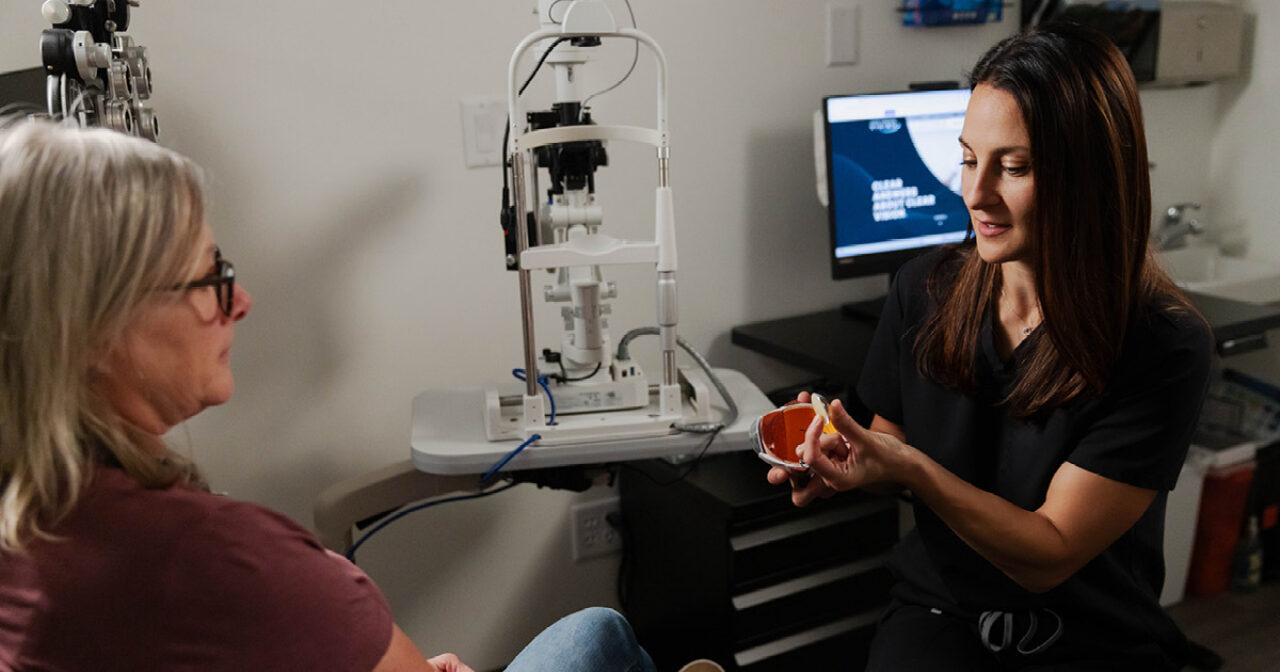
Finding out you have a cataract can also lead to a discovery you may not expect: you may have a choice about the lens that replaces your cloudy natural lens during cataract surgery.
For many people, that can feel like a lot to take in. You may hear terms like monofocal, multifocal, extended depth of focus, toric, or Light Adjustable Lens™ while you are still trying to understand the cataract itself.
The good news is that you do not have to make that decision on your own.
Your cataract surgeon can help you choose an intraocular lens, or IOL, based on the health of your eye, your prescription, your visual goals, and the way you use your vision every day. At Vance Thompson Vision in Cedar Rapids, Dr. Caroline Wilson and the care team guide Eastern Iowa patients through those choices one step at a time.
The goal is not to choose the lens with the longest list of features. It is to choose the implant that makes sense for your eyes and your life.
What Are the Premium Lens Options Available for Cataract Surgery?
During cataract surgery, the cloudy natural lens inside your eye is removed and replaced with a clear artificial lens. There are several types of lens implants available, and each approaches vision correction differently.
Monofocal Lenses
A monofocal lens provides focus at one primary distance, which may be near, intermediate, or far. When a monofocal lens is set for distance vision, glasses are typically still needed for reading or other close work.
Multifocal Lenses
Multifocal lenses are designed to provide useful vision at multiple distances. For the right patient, they can reduce dependence on glasses for activities ranging from driving to reading, although some patients may experience glare or halos, particularly around lights at night.
Extended Depth of Focus Lenses
Extended depth of focus, or EDOF, lenses create an extended range of useful vision rather than several separate focal points. They may be a good fit for patients looking for a broader range of distance and intermediate vision, although near vision needs can vary by lens and patient.
Light Adjustable Lens™
The Light Adjustable Lens, or LAL®, offers a different form of customization. After cataract surgery and healing, the power of the lens can be fine-tuned using a series of controlled ultraviolet (UV) light treatments based on how you are actually experiencing your new vision.
These descriptions are only a starting point. For a more detailed breakdown of the different lens options and how they work, read our Cataract Lens Options blog.
What Is the Difference Between Basic and Advanced Cataract Surgery?
Both basic and advanced cataract surgery remove the cloudy natural lens that is causing visual impairment and replace it with a clear lens implant. The difference is largely about what you want your vision to do after the procedure.
Basic cataract surgery typically uses a monofocal corrective lens focused at one distance. It restores clarity, but most patients will continue to use glasses for some activities.
Advanced cataract surgery uses additional diagnostic technology and advanced or premium lens implants to address a broader range of visual goals. For some patients, that may mean correcting astigmatism or reducing dependence on glasses and contact lenses after surgery.
Neither choice is automatically right for everyone. The better question is what you would like your vision to support once the cataract is gone.
Learn More About Cataract Surgery at Vance Thompson Vision
How Do You Know Which Lens Is Right for Your Life?
This is where the lens conversation becomes personal.
Measurements from your eye examination give your surgeon important information, but numbers alone do not tell the whole story. Your daily routine, hobbies, work, and expectations all help Dr. Wilson understand how you want to use your vision after surgery.
During your cataract consultation in Cedar Rapids, the team may talk with you about questions such as these.
How Important Is Glasses Independence to You?
Some patients are completely comfortable putting on reading glasses after surgery. Others have relied on glasses or contact lenses for years and would like to depend on corrective eyewear as little as possible.
There is no correct answer. But your preference can significantly influence which lens options deserve consideration.
What Does a Typical Day Look Like?
Think about where you spend your visual attention.
Do you read books for hours at a time? Work at a computer? Golf, sew, cook, or spend a lot of time outside? Do you frequently switch between a phone, computer screen, and objects across the room?
Different lenses provide different ranges of focus. Understanding your everyday life helps your surgeon prioritize the distances that matter most to you.
Do You Drive Frequently at Night?
Nighttime driving is another important part of the conversation.
Some lens technologies can produce glare, halos, or changes in visual perception around lights, particularly while the eye and brain are adapting. If you regularly drive after dark, your surgeon will want to understand how important low-light vision is to your lifestyle.
Do You Have Astigmatism?
Astigmatism affects how light focuses inside the eye and can influence your vision after cataract surgery if it is not addressed.
Modern cataract technology gives surgeons several ways to manage astigmatism, including toric lens implants. Measurements such as corneal topography can help your care team understand the shape of your cornea and determine whether astigmatism correction should be part of your surgery plan.
Have You Had Previous Eye Surgery?
Previous LASIK, PRK, corneal surgery, retinal surgery or treatment, or other eye procedures can affect lens calculations and which technology may be appropriate.
Other aspects of eye health matter, too. Conditions affecting the cornea, retina, or optic nerve, as well as glaucoma or dry eye disease, can influence the recommendation.
This is why choosing a lens from an online comparison chart alone is not the best approach. Your consultation combines measurements with a conversation about your life so the recommendation is built around your individual eyes.
Does It Matter That You Have Astigmatism?
Yes. Astigmatism can be an important part of cataract lens selection.
Astigmatism occurs when the front surface of the eye has an irregular curvature that causes light to focus unevenly. Even after a cataract is removed, uncorrected astigmatism can continue to affect the sharpness of your vision.
Toric versions of several intraocular lens designs are available to address astigmatism during cataract surgery. Correcting it at the same time as the cataract can improve the quality of the final visual result and may reduce the need for glasses afterward.
The amount and type of astigmatism matter, so the decision starts with detailed measurements rather than simply knowing that astigmatism appears on your prescription.
Will Insurance Cover a Premium Lens?
Insurance is another part of the cataract conversation, and it is important to understand the difference between medically necessary cataract treatment and elective upgrades.
Medicare may cover medically necessary cataract surgery that uses a conventional intraocular lens. Private insurance coverage varies by plan, including deductibles, copays, and other out-of-pocket costs.
Advanced lens technology and related elective services may involve additional out-of-pocket costs.
You do not need to figure that out before your appointment. The patient counseling team in Cedar Rapids will review the financial breakdown with you, including what may be covered by insurance and what would be your responsibility, before you make a decision.
What Can You Expect at Your Cataract Consultation in Cedar Rapids?
A cataract consultation is more than confirming that a cataract is present.
The Cedar Rapids team will perform a detailed eye examination and advanced diagnostic testing to understand your prescription, cornea, astigmatism, and overall eye health. Your care team will also look for other eye disease or conditions that could influence your surgical plan or lens recommendation.
Just as important is the conversation.
Dr. Wilson and the team also take time to understand what is bothering you about your current vision, the signs and symptoms you have noticed, what you hope surgery will change, and how you want to use your vision afterward. That conversation, together with your measurements and diagnostic results, helps guide a personalized lens recommendation.
You do not need to make a rushed decision. The Cedar Rapids team takes a warm, thorough approach focused on helping patients feel informed and comfortable with their care.
Why Do Eastern Iowa Patients Choose Dr. Wilson for Cataract Surgery?
Dr. Caroline Wilson is a board-certified ophthalmologist in Cedar Rapids who specializes in cataract, corneal, glaucoma, and refractive surgery.
After earning her medical degree from the University of South Alabama College of Medicine, Dr. Wilson completed her ophthalmology residency at the University of Iowa. During residency, she received the ASCRS Resident Excellence Award in recognition of her surgical skill and compassionate patient care.
She then completed a competitive surgical fellowship at Vance Thompson Vision in Sioux Falls, where she continued developing her expertise in advanced vision correction procedures and technology. Today, her approach in Cedar Rapids combines that surgical training with the kind of detailed, reassuring communication patients often want when they are making a permanent decision about their vision.
The practice itself also has deep roots in Eastern Iowa. The Cedar Rapids location has served patients since 1996 and became part of Vance Thompson Vision in 2024. That combination pairs decades of local care with Vance Thompson Vision’s broader focus on advanced technology and clinical research.
Patient reviews of Vance Thompson Vision consistently describe teams that take time to explain options, answer questions, and help patients feel comfortable before moving forward.
Ready to Start the Conversation About Your Cataract Lens Options?
You do not need to know which lens you want before your first appointment. You also do not need to be completely certain that you are ready for cataract surgery.
If cataracts are beginning to interfere with driving, reading, work, hobbies, or everyday life, you can start by taking the Vance Thompson Vision Vision Quiz to learn more about your options.
When you are ready to speak with the Cedar Rapids team, schedule your cataract consultation online. Dr. Wilson and the team welcome patients throughout Eastern Iowa at every stage of the decision process.
Frequently Asked Questions About Cataract Lens Options
What are the main cataract lens options?
The main categories include monofocal, multifocal, extended depth of focus, and Light Adjustable Lens implants. Toric versions of certain lenses can also address astigmatism. The right choice depends on your eye health, prescription, and vision goals.
Do premium cataract lenses eliminate the need for glasses?
Premium lenses can reduce dependence on glasses, but no lens can guarantee that you will never need glasses again. Your surgeon can explain what level of glasses independence is realistic for your eyes and the lens you are considering.
Can cataract surgery correct astigmatism?
Yes. Astigmatism can often be addressed as part of cataract surgery using a toric intraocular lens or other surgical techniques. Your eye measurements will help determine the appropriate approach.
Does insurance pay for premium cataract lenses?
Medicare may cover medically necessary cataract surgery with a conventional intraocular lens, while private insurance coverage varies by plan. Advanced lens technology and related elective services may involve additional out-of-pocket costs.. The patient counseling team will review your specific benefits and expenses with you before surgery.
How do I know which cataract lens is right for me?
The choice depends on more than your prescription. Your surgeon will consider your cornea, astigmatism, overall eye health, previous eye surgery, lifestyle, nighttime vision needs, and how important reducing dependence on glasses is to you. A comprehensive cataract consultation is the best way to narrow down your options.
Medically Reviewed by:
Caroline Wilson, MD · Ophthalmologist
Board-certified ophthalmologist specializing in cataract, cornea, glaucoma, and refractive surgery
Last reviewed Sept 14, 2026
from Vance Thompson Vision Blog https://www.vancethompsonvision.com/blog/premium-cataract-lens-options-eastern-iowa
via Vance Thompson Vision


Comments
Post a Comment