How to Tell if You’re a Candidate for LASIK, PRK, ICL, or RLE
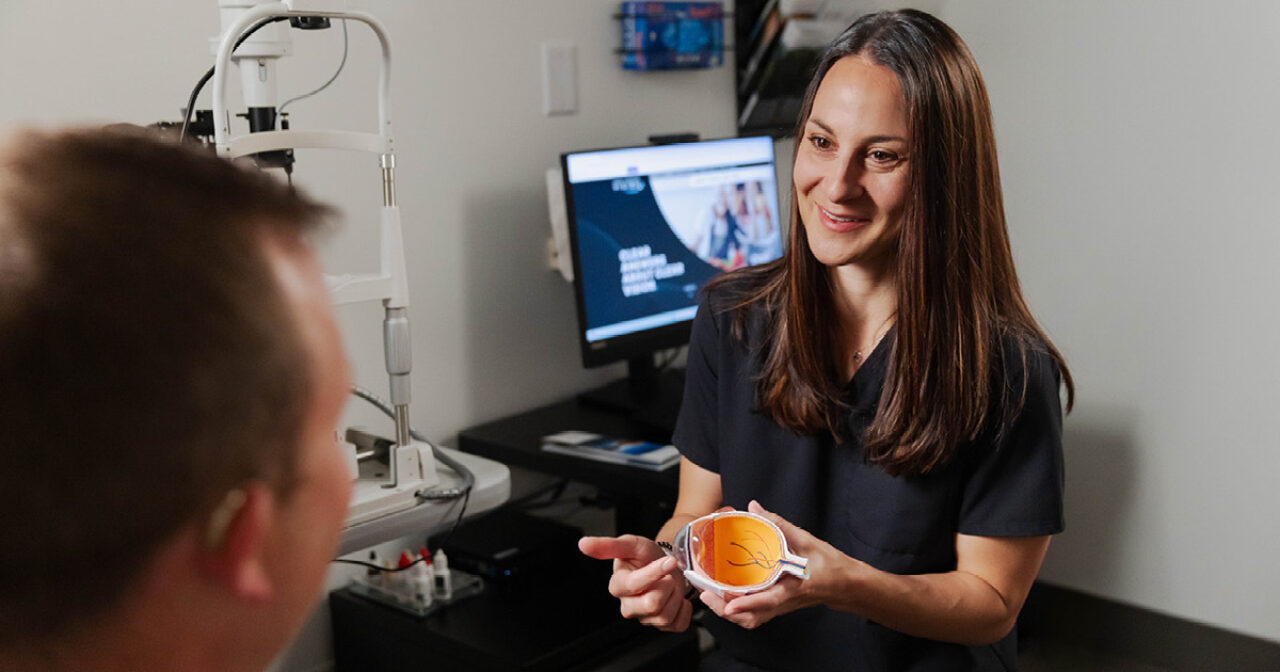
The greatest advantages of modern vision correction are that multiple options are available to help patients achieve clearer vision. If a patient doesn’t qualify for LASIK, they may be a better candidate for a different procedure like PRK, ICL, or RLE.
We offer all of these options because every eye is unique and may require a different approach depending on the individual’s needs and visual goals. With that in mind, you may be wondering, “How do I know which option is best for me?”
While we can’t give you the definitive answer in this blog, we can provide helpful information to guide your conversation with your eye doctor. Nothing replaces an in-person consultation, where we run our diagnostic tests, and take the time to understand your vision and your goals. From there, we'll give you our honest recommendation, and you can take the time you need to think it over and talk with the people who matter most before deciding.
You can also watch our Refractive and Cataract Surgery Seminar on YouTube. It is a great resource for you and anyone who plays a role in your important decisions.
What happens during the procedures
LASIK
LASIK is a laser vision correction procedure that reshapes the cornea (the clear front surface of the eye) so light can focus correctly on the retina. During the procedure, the surgeon creates a thin protective flap on the cornea, lifts it, and gently reshapes the underlying tissue.
PRK
PRK, or Photorefractive Keratectomy, differs from LASIK in that the surgeon does not create a flap on the cornea. Instead, they remove the cornea’s outer layer (epithelium) and use a laser to reshape the underlying cornea.
ICL
ICL, or Implantable Collamer Lens, is a custom lens, some think of it like an inside-the-eye contact lens that you can’t feel, that corrects clear vision at a distance. The surgeon creates a small opening in the eye and slides the customized, delicate soft lens behind the iris — the colored part of the eye.
RLE
RLE, or Refractive Lens Exchange, is a surgical procedure where your eye’s natural lens is replaced with an artificial lens (IOL) to correct your vision. The procedure is very similar to cataract surgery. The difference is, instead of waiting for your eyes to develop cataracts, this surgery can be performed on a clear lens that has lost its ability to focus. Each year, about 1% of the U.S. population undergoes cataract surgery; over a lifetime, roughly 4 in 10 Americans will likely have cataract surgery if they live long enough. A lot of patients consider RLE to get the benefits of advanced implants and enjoy the fact that they will not need future cataract surgery because their natural lens has been replaced.
Most procedures correct nearsightedness (myopia), farsightedness (hyperopia), and astigmatism. RLE also offers the added benefit of correcting presbyopia, which is an age-related condition that affects near vision.
Considerations for Candidacy
LASIK
In general, strong LASIK candidates are 18 years and older, have a stable vision prescription, and are in good overall health.
PRK
Strong PRK candidates are 18 years and older and live active lifestyles. Their corneas are typically thinner, and they require low to moderate vision correction.
ICL
ICL candidates are typically around 21-45 with moderate to severe nearsightedness, with or without astigmatism. It’s ideal for those with thin corneas, corrections that are too high for laser vision correction, or concerns about dry eye.
RLE
Candidates for RLE are typically 40 years or older and may just need reading glasses or be experiencing moderate to high levels of myopia, hyperopia, or presbyopia and wearing bifocals or readers over their contact lenses. RLE candidates want to restore their reading range to be able to function at distance, intermediate, and near without glasses.
What to Expect After Surgery
LASIK
LASIK recovery is quick. Most patients notice improved vision within 24 hours and can return to their daily routines in one to two days.
PRK
Initial healing for PRK lasts around two to three days. Most patients regain functional vision between four and seven days and can resume daily activities after a full week of rest. It can take one to three months for visual clarity to fully recover.
ICL
Patients usually notice improved vision within 24 hours, with functional vision returning in one to two days — but it will take around one to three months for the eye to fully stabilize.
RLE
Most patients notice improved vision within 24–48 hours. However, it can take around four to six weeks for the eye to fully stabilize.
Cost, Insurance, and Financing
LASIK, PRK, ICL, and RLE are all elective procedures and therefore are not covered by insurance. At Vance Thompson Vision, we work with trusted financing partners to offer you credit options that will help manage costs.
In some cases, if vision surgery is medically necessary and covered under your health insurance, you should speak with your insurance provider to understand your policy and verify coverage. FSAs and HSAs can be used to cover the costs of vision correction.
Some vision plans may cover portions of laser vision correction. Our team can help you explore your specific benefits.
Four Procedures. One Goal.
The beautiful thing about having multiple vision correction options is that even if you don’t qualify for one procedure, there may be another option that’s a better fit for your eyes and lifestyle.
At Vance Thompson Vision, our team works with you to find your best option for your needs, so you can continue to enjoy life with clear, comfortable vision.
When it comes to deciding who to trust with your vision, experience and personalized care matter.
Learn which option is right for you by scheduling a consultation or taking our short vision quiz.
Click to schedule online or call 1-877-522-EYES (3937).
from Vance Thompson Vision Blog https://www.vancethompsonvision.com/blog/candidate-for-lasik-prk-icl-rle
via Vance Thompson Vision


Comments
Post a Comment